Interstate Highway System
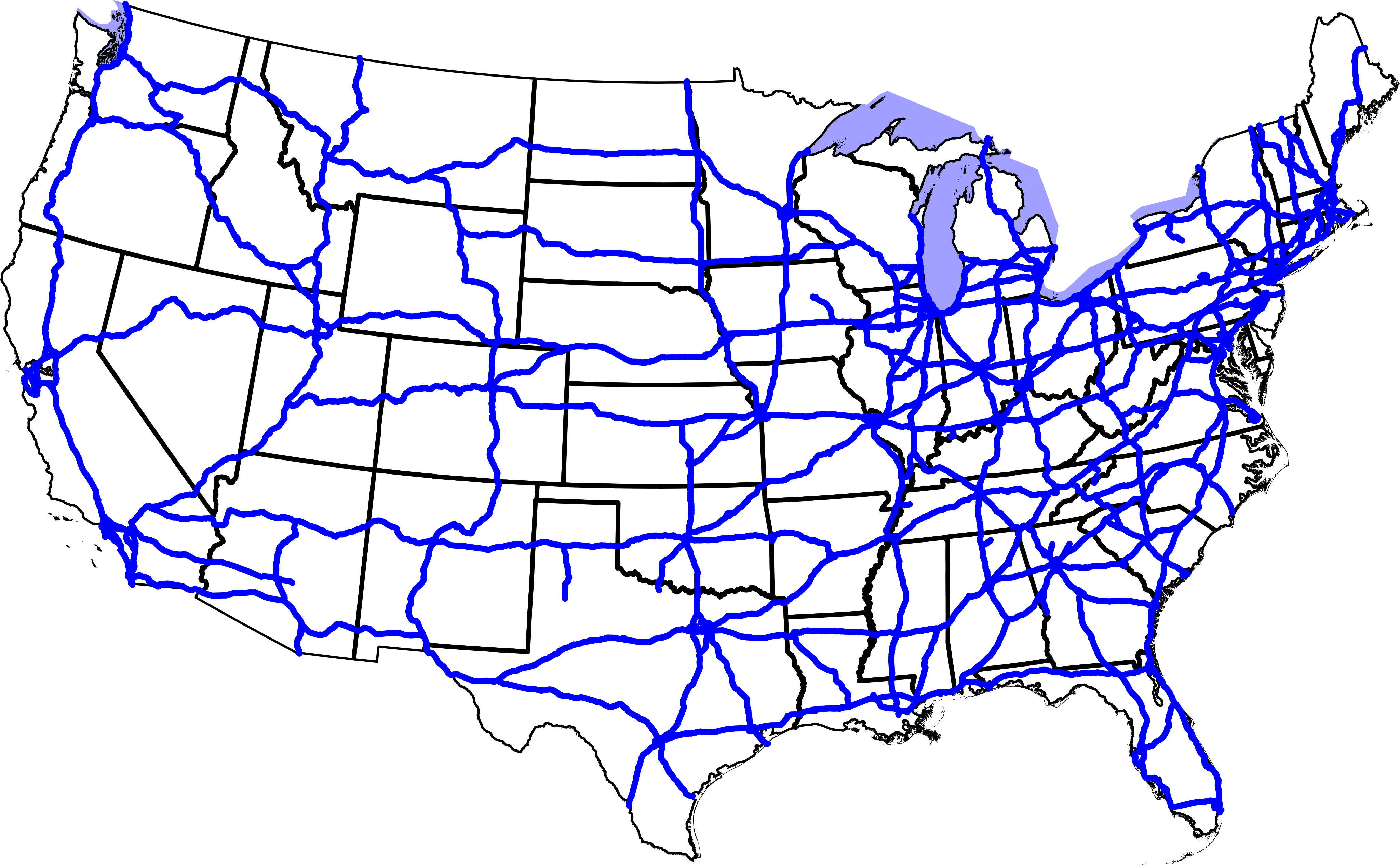
The Interstate Highway System was authorized by the Federal Aid Highway Act of 1956. The original system was completed in 1992.
The original numbering system for interstates was developed in 1957, and the current system dates from 1973. The main-line interstates in the continental U.S. are assigned numbers less than 100.
With many exceptions, the east-west interstates have even numbers and increase from south to north - for example, I-10 goes from Jacksonville to Santa Monica, and I-90 goes from Boston to Seattle. The north-south interstates have odd numbers and increase from west to east - for example I-5 goes from the Canadian border in Washington to the Mexican border in California, and I-95 goes from the Canadian border in Maine to Miami. This is the opposite of the system of U.S. highways, which increase from east to west and from north to south. (There is no I-50 or I-60, to avoid confusion with U.S. highways with those numbers, which would be in the same part of the country.)
The auxiliary interstates primarily serve urban areas. Their numbers have three digits - a single digit is prefixed to its parent interstate highway. For example, I-235 serves parts of Des Moines, Wichita, and Oklahoma City - all of which are on the north-south I-35.


No comments:
Post a Comment